
IT WAS JUST AN ACCIDENT (Cannes FF 2025) – Review by Diane Carson
A Simple Accident personalizes Iranian politics
The Iranian title alone, It Was Just an Accident, suggests that dire consequences will surely follow in the wake of an innocent incident. That writer/director Jafar Panahi included details of the brutal treatment he learned about from prisoners during his own detention in Iranian prisons means the film’s impact is as frightening as it is real. As Panahi said at his Cannes Film Festival press conference, “It’s the Islamic Republic of Iran that made this film.” He added that he listened to many stories of inhumane treatment. Once on the set shooting, Panahi ensured authenticity with other ex-prisoners on hand for corroboration.
A Simple Accident begins at night when Eghbal, driving with his wife and daughter, accidentally hits dog. After the damaged car breaks down the next day, he petitions a garage mechanic across the road for assistance. There Vahid working elsewhere in the building hears what he recognizes as the unmistakable squeaking sound of Eghbal’s false leg as he limps back to his car. Convinced Eghbal is the cruel tormentor called Peg Leg, the man who viciously tortured Vahid in prison permanently damaging his kidneys and, it certainly seems, his emotional equilibrium, Vahid seeks revenge in drastic ways, initiating a gruesome murder of Peg Leg. However, always blindfolded, having never seen his captor, Vahid must relent when Eghbal’s protestations give him pause, morality still essential in Vahid’s decisions.
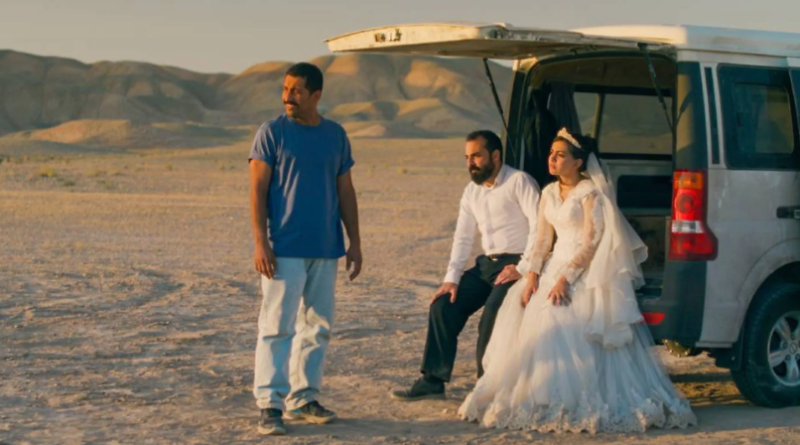
Not entirely deterred, however, Vahid seeks and enlists other Peg Leg victims for their confirmation, individuals representing a cross section of those persecuted from different levels of society. All become roped in to Vahid’s assessment of Peg Leg, though bookseller Salar is not happy to see Vahid any more than Shiva is. She’s interrupted photographing bride Goli and groom Ali, both of them with haunting memories as well. Hamid completes the group, the outlier in terms of rabid anger. Some lighter banter and conscientious resistance follow amidst Vahid’s intrusive, ironic interruption of wedding photos. Hamid gets roped in, and a debate including many moments of slapstick humor ensues as the group, all victims, confronts their ethical dilemma, notably, if they can agree that this is Peg Leg, should they stoop to murderous revenge, surrendering their own moral compass.
In addition to dictatorial tyranny, corruption is endemic, exploitation unrestrained. Security guards have invested so completely in bribery that they carry their own portable credit card machines and a nurse requests money plus pastries for medical care. Writer/director Panahi knows well the world he creates here, leavened with humor as a cushion for the oppression he himself has suffered. As he described at the film’s Cannes press conference I attended, Panahi knows this firsthand, subjected to a twenty-year ban on filmmaking that he ignored, filming in secret. Prior to that, Panahi spent time in solitary confinement in a one-and-a-half by two-and-a-half-meter cell, blindfolded, having to ring a bell to go to a toilet two or three times a day. He endured hours of interrogation, and, the last time he was arrested, lived with three hundred others in an overcrowded cell. He also knows that his own crew have been subjected to interrogation. In addition, Panahi was not allowed to travel since 2003 until this Cannes festival. An inspirational figure, he concluded the press conference asserting, “You can always find a solution.” Indeed, and for his courageous work, A Simple Accident won the top prize at this year’s Cannes Film Festival, the Palme d’Or.
