
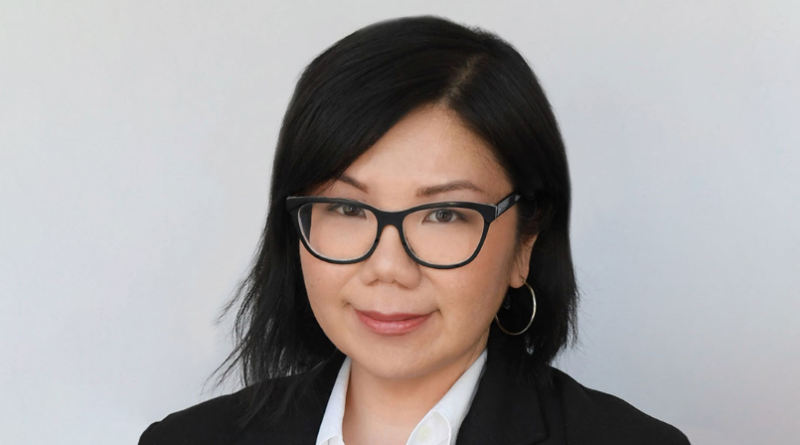
JUDY LUNG on TIFF 2026 and the Fest’s Future – Liz Braun interviews (Exclusive)
Judy Lung regards TIFF 2026 as the start of “the next 50 years.” As part of the executive team, she’s one of the main architects of last year’s 50th birthday party for the Toronto International Film Festival, and in her role as VP, Strategy, Communications, and Stakeholder Relations, Lung is already working hard to ensure the festival is around for a centenary celebration.
 TIFF 2026 is off to a good start. Now underway, this year’s festval includes the new content market, boosting the organization’s capacity as a launch pad for film and as an intro to the Canadian industry. Some 6,000 market delegates are adding to that special festival energy that has once again taken over a large swath of Toronto’s downtown core; regular celebrity announcements (Julianne Moore! Helen Mirren! Gary Oldman! Chris Rock!) have been amplified by such breaking industry news as Canada’s former Prime Minister, Justin Trudeau, unveiling his new production company, Hope & Hard Work, at TIFF.
Further ratcheting up fan furor this year is the inclusion of TV’s Heated Rivalry star Hudson Williams in the popular In Conversation With program, a genius move considering the importance of always finding new audiences for the world’s largest public film festival.
In her role, Lung has a wide view across the organization and is involved in TIFF year-round beyond its annual film fest. The organization is now in year two of a three-year strategic plan that focuses on future-proofing TIFF, and Lung says that the strategy part of her role has come to the forefront, given the changes across the industry.
“The reality is that we are part of the larger global industry, which continues to evolve at an accelerated pace,” she said, nodding to both political and film business changes.
She is particularly attentive to the role of the media in all this.

Building collegial relationships with other festivals is important.
“We are all in the same boat at the moment, grappling with big, philosophical questions, like,‘what are film festivals for any more?’ “There’s a lot of uncertainty.”
That uncertainty includes global politics at the moment, although Canada is potentially poised to come up smelling like roses in all that. Toronto and its festival are becoming increasingly more sophisticated and the formal content market will help show visitors just how robust the industry is north of the 49th parallel.
“There has been a massive transformation in Toronto, and we talked a lot about that in the 50th anniversary year,” says Lung.
 “When you look at 50 years of the city, at immigration trends, how the city overall has expanded — that speaks to the success of TIFF over the years. We are an international festival, not just because we bring in 60 to 70 percent international films, but because our audience is actually international. That’s who lives here. The city is absolutely multicultural in the best way. That’s who is attending the festival — all age groups, all communities — that’s who’s going to these premieres and supporting the talent coming in. It truly is a global audience.
“That still speaks to me as a really powerful element of this festival and one of our most distinguishing features.”
Lung is focussed now on what she jokingly calls, “Other ways of doing stuff”, shorthand for anticipating and dealing with the on-going evolution of the film world.
“Whether we’re talking about press or whether we’re talking about how we organize ourselves or where we put our focus, there are other ways of doing stuff, of achieving goals. Look at the industry around us. Everybody is looking for different ways to do what they’ve been doing for the past 10, 20, 100 years. And it’s critically important for us as an organization and as a festival to understand that and do that as well. We have so many different stakeholders — and specifically, within the entertainment industry, across film, across TV, across innovation, across all screens, everybody’s racing to the next thing.”
Lung worked on the publicity side of film for 20 years before taking on her role at TIFF, and so the press remains a source of interest. She lauds film critics for their role in helping launch films such as last year’s Secret Agent, for example. But a changing media landscape means that coverage also falls into the bucket of “other ways of doing stuff,” and that includes looking at the role of bloggers, influencers, social media mavens, Letterboxd — all of it.
“I don’t think festivals exist without press,” said Lung. “That’s obvious to you or me but I don’t know that it’s obvious to everyone … it’s not new, but we are in this space now where it’s often asked, ‘What do the press do? Are reviews important anymore?’”
Whether a review is positive or negative is not the festival’s purview, she adds. “But what’s important to the studios, and distributors and filmmakers and sales agents, et cetera, is important to us as well. Our programmers are looking at films that are going to speak to an audience, films that could really benefit from TIFF as a platform to get to the next level, films that the industry is buzzing about. And reviews and other press support that.
“Without that, how will anyone know about them?”

>Outside of TIFF, Lung is part of a team that works behind the scenes with the Golden Globes, helping revamp and strengthen the organization since the HFPA was disbanded three years ago.
She is immersed in film writing from around the world as part of this work, “And that has allowed me — beyond contributing my thoughts on film journalism and entertainment journalism — to look at the needs of the international press corps as it relates to festivals and awards.”
There is a need, she states, to think differently about who makes up the press corps and how they are supported. “Things have completely changed, but we’ve still got old models in place, and there are still some invisible, built-in hierarchies.
“The baseline is completely different now, and we haven’t acknowledged that — things change every 20 minutes! As an industry, we haven’t given enough thought to freelance work, for example. We have to have some space for those freelancers who don’t have a story locked down yet. If they’re going to make their way to TIFF because they believe they can get a story here, then we have to figure out how we actually accommodate that. How many of our press, our accredited media here at TIFF this year, are freelance, versus how many 10 years ago?
“My guess is there’s been a steep increase.”
Lung’s objective is to organize things in a way that will, “help the press corps for the future,” because reviews and coverage have a place in the bigger picture.
The main objectives — equity and inclusivity — involved in what Lung is working on for the Golden Globes are the same goals Lung strives toward at TIFF. This year, for example, there are more than 90 female-directed movies at the festival, with fully two-thirds of the documentary section helmed by women.
There is always more work to be done, says Lung, but overall, “Equity is part of the DNA of the festival, it’s part of our identity.”
And it’s partly a reflection of Toronto itself, she adds.
“And a lot of it also has to do with what we do between festivals, and the work that we do in terms of talent development … one of our most successful initiatives is Share Her Journey, which is about showcasing, championing, and then supporting, women creatives.”
 Lung sees TIFF 2026 as a new chapter, not just for film and series, but for innovation, too.
“What we see in year one of the next 50 years will evolve as we go forward as part of the global entertainment industry. We are prepared to adapt and grow within that industry. When you ask, ‘what are we doing now?’ We are setting up for success for a day when we’re no longer here, 10 or 20 or 30 years from now, and The Market is the most obvious example right now, formalizing what has existed for a long time.
“How do we create infrastructure? What are the optimal conditions to take a great thing and make it better? Striving to do better is how we operate as an organization,” she says.
“It’s baked into how we do things.”
