HEAD TO HEAD (TIFF 2026) – Review by Beth Accomando

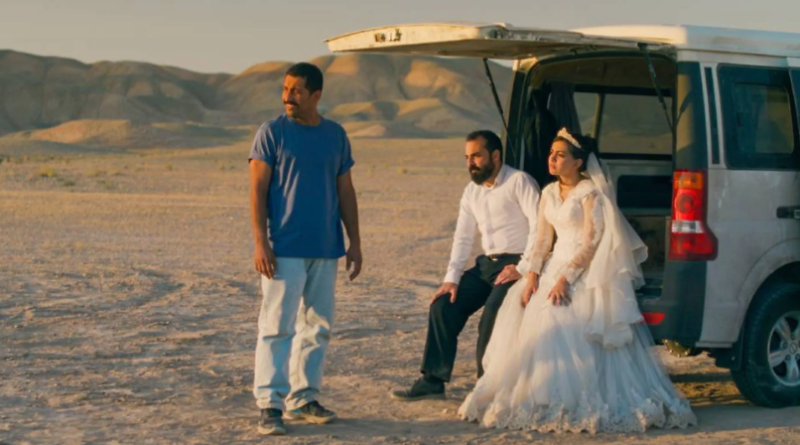
Filmmaker Ghasideh Golmakani was born in Tehran but moved to Paris where she completed her PhD with a dissertation entitled The Struggle of Iranian Women Filmmakers Before and After the Revolution. She did not want to examine that struggle from afar, so she returned to Iran where she made shorts, documentaries and behind the scenes films for other directors. Her short fiction films focus often focus on violence experienced by women in Iran. Head to Head marks her narrative feature debut although it feels very much like a documentary in how it addresses women’s issues. Head to Head marks her narrative feature debut although it feels very much like a documentary in how it addresses women’s issues.

Read more
THE SEALED SOIL – Review by Diane Carson

Based on the true story of a young woman in a village in southwestern Iran, peasants were driven off their land in the service of progress. In this circumscribed world, Rooy-Bekheir is shown trapped within a courtyard in which chickens peck and circle, no escape possible. A walled gate increases the feeling of entrapment, for Rooy-Bekheir’s future is bleak in a culture of disenfranchised women. During the Shah’s reign, because of its critique of the pervasive, misogynistic paternalism that restricts women’s choices, director Marva Nabili’s work was considered illegal. As a result, after surreptitiously shooting on 16-millimeter film, Nabili had to smuggle the negative out of the country for developing and editing.

Read more

IT WAS JUST AN ACCIDENT (Cannes FF 2025) – Review by Diane Carson

The Iranian title alone, It Was Just an Accident, suggests that dire consequences will surely follow in the wake of an innocent incident. That writer/director Jafar Panahi included details of the brutal treatment he learned about from prisoners during his own detention in Iranian prisons means the film’s impact is as frightening as it is real. As Panahi said at his Cannes Film Festival press conference, “It’s the Islamic Republic of Iran that made this film.” He added that he listened to many stories of inhumane treatment. Once on the set shooting, Panahi ensured authenticity with other ex-prisoners on hand for corroboration.

Read more

WEEK IN WOMEN: Marva Nabili’s THE SEALED SOIL gets 4K restoration – Brandy McDonnell reports

A new 4K restoration of Iranian director Marva Nabili’s landmark 1977 debut feature The Sealed Soil (Khake Sar Beh Mohr) is opening May 30 at the Brooklyn Academy of Music in New York ahead of a national theatrical rollout later this year. The Sealed Soil is regarded as the earliest surviving feature film directed by an Iranian woman. The film centers on Roo-Bekheir (Flora Shabavis), a young woman living in a poor village in pre-revolutionary Iran. As the daily routine of her family and the entire village is disrupted by a state-ordered relocation, Roo-Bekheir refuses to agree to a forced marriage, a rejection her family interprets as demonic possession.

Read more

THE SEED OF THE SACRED FIG – Review by Jennifer Green

What makes this film so impactful is the way one family’s story is developed to reflect and embody the realities of an entire society. Tellingly, last spring, director Mohammad Rasoulof was sentenced to eight years in prison in Iran and other punishments for his critical work. He concluded shooting this film clandestinely and, in a tale worthy of its own film, made his way out of Iran on foot. He now resides in exile in Germany, which nominated Sacred Fig to represent it in this year’s International Oscar race. The film also screened in competition at last May’s Cannes Film Festival,

Read more

IN THE ARMS OF THE TREE – Review by Jennifer Green

This intimate yet universal family tale was selected to represent Iran in the International Oscar category. The debut feature shows a lot of promise for writer-director Babak Lotfi Khajepasha. He’s also not the only Iranian nominee contending for the International Oscar; exiled director Mohammad Rasoulof’s also poetically-titled The Seed of the Sacred Fig, set against political protests in Tehran, was chosen to represent Germany. In the Arms of the Tree touches on divorce, its storyline suggests a strong support for the nuclear family, and the cinematography accentuates the beauty of the Iranian countryside. The film is full of symbolism, with the natural world playing a role in the characters’ lives and foreshadowing events to come.

Read more

MY FAVOURITE CAKE – Review by Nadine Whitney

My Favourite Cake offers a view of a hidden milieu. The inner life of women in Iran. Directors Maryam Moghadam and Behtash Sanaeeha’s work is an act of political resistance. In one night, Mahim and Faramarz experience falling profoundly in love finding the liberty to be who they are. Mahim bakes Faramarz a cake, an orange blossom cake with vanilla. The cake she makes when she hopes someone will come to be with her. Like the mouthwatering morsel, My Favourite Cake is an act of hope, desire, and a sumptuous treat. It is also sad, furious, and pushing against a regime that stifles basic humanity. Glorious and heartrending.

Read more

THE SEED OF THE SACRED FIG (NYFF 2024) – Review by Diane Carson

A repressive scenario unfolds in Iranian writer/director Mohammad Rasoulof’s The Seed of the Sacred Fig through a microcosm of intolerance and violent retaliation. Anchored in his Teheran family, Iman earns a promotion to investigative judge in the Revolutionary Guard Court, an advancement welcomed by wife Najmeh. Meantime, their teenage daughters Rezvan and Sana become involved, through a schoolmate, in violent protests challenging repressive head coverings. Bureaucratic and interpersonal intimidation, demands for unquestioning compliance, paranoia, and sadistic retaliation all materialize as the metaphor of the sacred fig tree that strangles its host suggests a chilling comparison.

Read more

THE SEED OF THE SACRED FIG (TIFF 2024) – Review by Nadine Whitney

Mohammad Rasoulof’s The Seed of the Sacred Fig is cinematic resistance and bravery – devastating as it is to use the experience of a single family in Tehran to illustrate the violent repression of Iranian dissent against the theocratic state. A principled lawyer, Iman is the father of two daughters; university aged Rezvan and high schooler Sana. His wife Najmeh is attentive to his wellbeing offering him tea, comfort, and succour in their darkened bedroom. The Seed of the Sacred Fig is a formidable, terrifying thriller honoring the bravery of people standing against tyranny. Rasoulof mixes real footage of the protests into the film while showing three fictional women surviving consuming fanaticism. Unforgettable.

Read more

A SISTERS’ TALE (TIFF 2024) – Review by Leslie Combemale

There’s no question A Sisters’ Tale is an act of love and a passion project on the part of Iranian filmmaker Leila Amini. For this intimate film, she follows her sister Nasreen for seven years, documenting her experience of seeking more. At the beginning of A Sisters’ Tale, Nasreen has two children, an often unavailable husband Mohamad, and a dream to sing professionally that has all but evaporated. As Leila Amini expands her perspective, she will be a valuable documentarian for the women of her culture and beyond.

Read more