
FUTURE TENSE (TIFF 2026) – Review by Leslie Combemale
It’s a tricky thing to couch a message about privilege, racial inequity, and the existential threat to the environmental we all face, in a film about time travel. I know, it’s been done. It’s been done well. Jenna Cato Bass, the writer/director of TIFF release Future Tense, has been writing and producing genre films of all sorts since early in her career. For Future Tense, she chose to tell the story of a financially strapped interracial couple, who clearly have issues, as they take a trip into the future together. Cato Bass’s story might have been more compelling, if only either of the lead characters were at all likable. Even the lead actor Lawrence Maleka, who plays Lwando, thinks he’s a jerk. Of course he is. He’s trying to save the world.
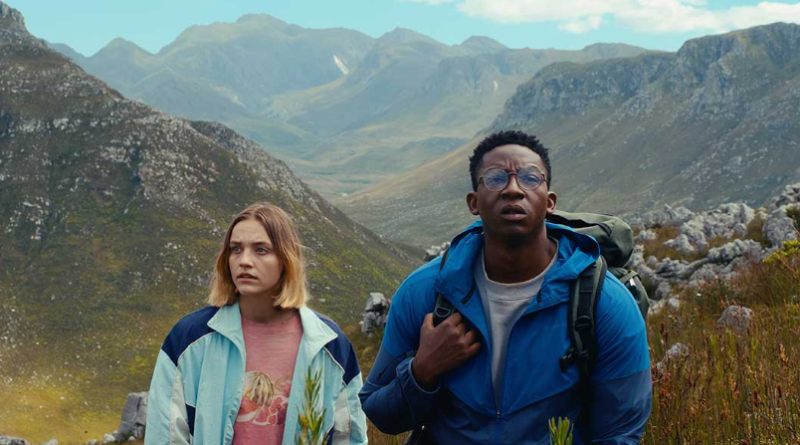
In a world where wealthy tourists are using time travel to escape what has become a dystopian environmental disaster, South African Lwando (Maleka) wins a short holiday, and invites Tara (Kristen Raath) to come along, and she jumps at the chance. They land in 1647, just days before the wreck of a Dutch trading vessel leads to the European colonization of what becomes South Africa. It’s not by accident. Lwando has plans, plans he hopes will alter history. Tara, meanwhile, is hoping to share she’s pregnant with their child. When Lwando escapes their very tightly controlled parameter, and ventures out into the pre-South African wilderness, things don’t go well. They are ever at odds on their adventure, with Lwando knowing his destination and plans, and Tara just trailing along, leaving bits of paper or food for what are called the Continuity Operatives to find them.
The story is very much about just how different the world is for Black and White South Africans, and how much specific events in the past led to inequities and racism in that country and the world. It’s also about one couple, and how they interact, forgive, or ignore each other’s weaknesses. There are a few surprises in the film that might hook in some of the audience, but for me, it didn’t come together well enough for an emotional payoff. That’s not to say there’s not something to enjoy or chew on here, and the actors perform quite admirably, especially since they do play fairly unlikable characters. As a little indie giving consideration to race relations through a genre lens, albeit from the perspective of a White female filmmaker, it offers an interesting perspective.
2 1/2 out of 5 stars.
