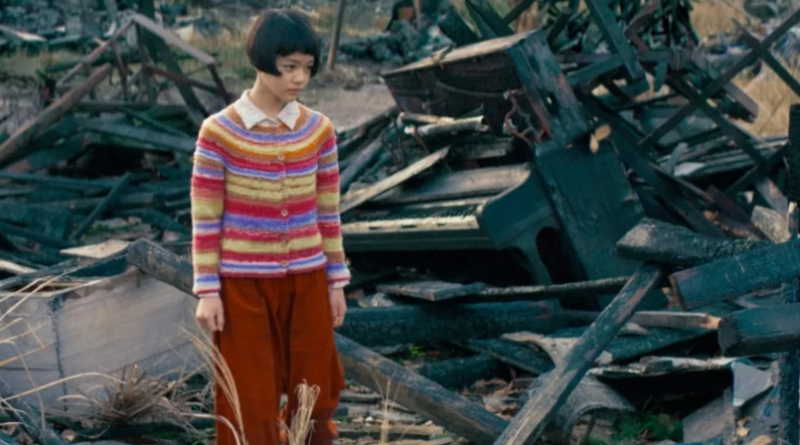
TITANIC OCEAN (Cannes 2026) – Review by Diane Carson

Greek writer/director Konstantina Kotzamani Titanic Ocean delivers a pitch perfect profile of teenage Japanese women training at an elite boarding school. Each hopes to prove her abilities as a seductive, professional mermaid. Leading up to the 23rd International Mermaid Championships, the hopeful swimmers will endure competitive pressures amidst strong bonding as they spend days in the pool under the direction of Coach Kotaro. All believe that, as a dreamy, soft voiceover asserts, “A professional mermaid is a giver of dreams, and those dreams can be well paid.”

Read more

NAGI NOTES (Cannes 2026) – Review by Diane Carson

Following an introspective, searching Yuri on her return from Taiwan to small town life in mountainous, rural Nagi from Taiwan, writer/director Koji Fukada presents an understated, engaging exploration of a community through the two women at its center. Recently divorced, architect Yuri (Shizuka Ishibashi) reestablishes her close, restrained relationship to her now ex-sister-in-law Yoriko (Takako Matsu). A sculptor of human-size blocks of wood that she will chainsaw and shape into recognizable human likenesses, Yoriko takes Yuri on as a model, ensuring hours of time together.

Read more

KOKUHO – Review by Diane Carson

Of the artists the Japanese most revere, Kabuki actors rank high on the list. This knowledge informs and underscores the heightened personal and profound cultural crises in director Lee Sang-il’s Kokuho, translated as Living National Treasure, (Ningen Kokuho), referring both to Kabuki theater and Kabuki masters. As prescribed by the custom of honoring direct bloodline legacy, a Kabuki actor bequeaths his exalted position to his heir. That entitled person is Shunsuke Ōgaki, son of celebrated Kabuki actor Hanai Hanjiro II. However, after witnessing the violent yakuza murder of Kikuo Tachibana’s father by a rival gang and later observing a magnificent onnagata performance (a male playing a female role) by Kikuo, Hanjiro II adopts Kikuo who proves to be a disciplined, devoted Kabuki student. Talent will oppose and contest tradition.

Read more

THE RED SPECTACLES – Review by Diane Carson

The Red Spectacles imagines a mind-bending, dystopian future. For those uninitiated into Japanese artist Mamoru Oshii’s Kerberos Saga, The Red Spectacles (1987) packs quite a jolt. Opening titles announce that at the conclusion of the twentieth century, “to combat the rapid rise in urban crime and its increasing violence, the Metropolitan Police Dept established the ‘Special Armed Task Force Against Violent Crimes’ unit.” On screen background continues, “Armed with specially reinforced suits and heavy weaponry, they came to be known as ‘Kerberos: Watchdogs of Hell,’ and began their bold challenge against the criminal world. However, their actions were so severe in their hatred toward evil, that their ruthless investigative activities drew public criticism. The organization had no choice, but to be dismantled when a petty criminal was beaten to death by a member of the Special Investigation Unit.”

Read more

KOKUHO – Review by Sarah Ward

A captivating, all-consuming, resplendent and affecting drama convincingly adapted from Shuichi Yoshida’s bestselling novel of the same name — director Sang-il Lee’s third stint drawing from the author’s words following 2010’s Villain and 2016’s RageKokuho charts Kikuo’s career across half a century. Taken from the Japanese term for living national treasures, the film’s title looms as a promise, although the picture’s protagonist isn’t its only dedicated kabuki talent. That success extracts a cost, and that it’s often built on shrouding much that’s personal, mightn’t be a new revelation; however, Lee and screenwriter Satoko Okudera understand that anyone navigating a familiar plight isn’t merely caught in a copy, just as any actor, kabuki or otherwise, taking on a recognisable role isn’t simply mimicking their predecessors.

Read more

RENTAL FAMILY – Review by Diane Carson

Both the real world and film worlds are no stranger to the rental of actors to impersonate relatives, friends, romantic partners, or colleagues. The actors may attend funerals or weddings, meet for dinners or at bars, or show up at any event when a client needs an individual for any designated role. Japanese director/co-writer Hikari effectively dramatizes this practice in Rental Family as unemployed American actor Phillip Vandarpleog, living in contemporary Japan, must scramble for a job, landing work from a human rental agency.

Read more

RENTAL FAMILY – Review by Susan Granger

Rental Family proves once again that movies open portals of knowledge about other cultures. Who knew that in Japan there are ‘rental family’ services? A client in Tokyo can hire a performer, usually an out-of-work actor, to play a character in his/hers or someone else’s life. When American ex-pat Philip Vandarploeug interviews with Shinji for the job, he doesn’t believe it either. But, apparently, there’s still a stigma in Japan about seeking psychological therapy so Shinji’s staff function as mental health professionals – and “We need a token white guy,” he explains.

Read more

DESERT OF NAMIBIA – Review by Diane Carson

As amply demonstrated in Desert of Namibia, for 21-year-old, disenchanted beautician Kana, life in Japan proves frustratingly unrewarding, even alienating. Working an unfulfilling, uninteresting job at a laser hair removal salon, Kana bounces back and forth between two boyfriends. Without question, director Yoko Yamanaka captures the existential ennui of this young Japanese woman looking for equality, a rewarding job, emotional honesty and support, all promising a desirable future she seems incapable of working to achieve.

Read more

RENOIR (Cannes FF 2025) – Review by Diane Carson

As charmingly impressionist in style as its title Renoir suggests, writer/director Chie Hayakawa interprets the world through eleven-year-old Fuki’s eyes. A rambunctious, bright girl, Fuki perceptively watches her mother Utako Okita wrestling with a busy, stressed life. That results primarily from the imminent death of husband Keiji, Fuki’s father, ill with terminal cancer. With Utako preoccupied with Keiji and preparations for his funeral, Fuki enjoys the time and has the energy to explore her 1987 Tokyo community at leisure with schoolmates, a neighbor, her mother’s friend, and others with whom she comes into contact in the course of daily life.

Read more

GHOST CAT ANZU – Review by Leslie Combemale

The name of this anime feature film is Ghost Cat Anzu, which for any cat lovers out there, sounds compelling. But If you’re expecting a cute kitty on the order of Jiji, the black cat in Kiki’s Delivery Service, you’ll be disappointed. On the other hand, if you are aware of the Manga series written and illustrated by Akashi Imashiro, you might be happily surprised by the creative design and expansion upon the stories offered in the film.

Read more